
Aims & Scope
Aims
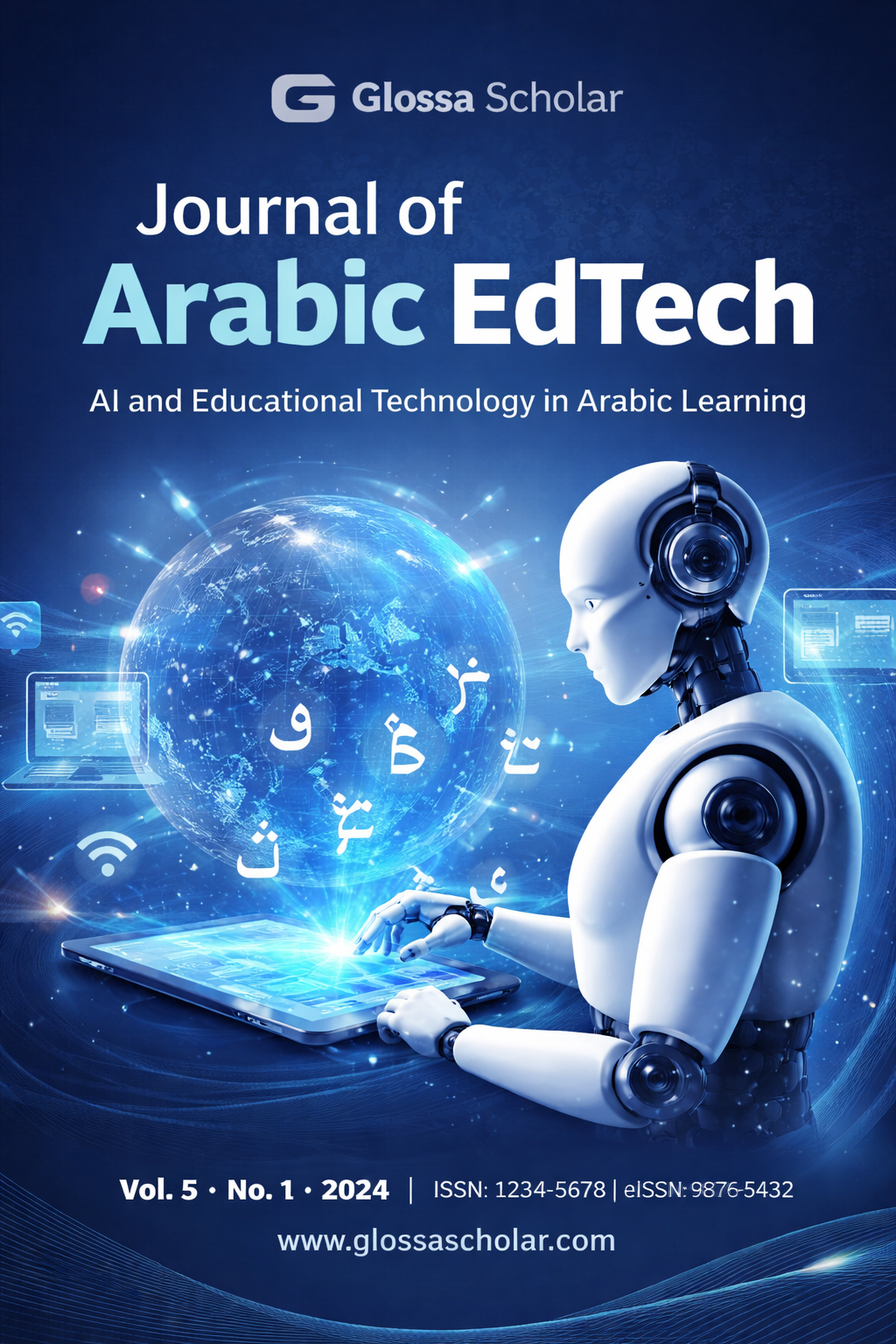
Journal of Arabic EdTech (JAET) aims to advance high-quality, internationally relevant research at the intersection of Arabic language education and educational technology. The journal seeks to become a leading global reference in Arabic Educational Technology by promoting methodological rigor, theoretical innovation, and data-driven instructional practices. JAET is committed to fostering interdisciplinary scholarship that integrates Arabic linguistics, pedagogy, assessment, instructional design, artificial intelligence, learning analytics, and digital transformation in education. The journal encourages research that contributes both to theoretical development and to practical implementation in technology-enhanced Arabic language learning environments. The journal prioritizes studies that demonstrate: Strong theoretical foundations Robust research design and methodology Empirical validation and statistical rigor Innovative technological application Scalable and transferable educational impact JAET welcomes contributions from researchers and institutions worldwide and promotes cross-regional collaboration and comparative international research.
Scope
JAET publishes original research articles, design-based research, experimental and quasi-experimental studies, systematic reviews, meta-analyses, theoretical and conceptual papers, and validated technological development reports. The scope of the journal includes, but is not limited to, the following areas: Artificial Intelligence in Arabic Language Learning Adaptive Learning Systems and Intelligent Tutoring Arabic Language Proficiency Testing and Digital Assessment Psychometric Validation in Arabic Language Testing Learning Analytics and Educational Data Mining Mobile-Assisted Arabic Language Learning (MALL) Online, Blended, and Hybrid Learning Models Gamification and Interactive Learning Design Human–Computer Interaction in Language Learning Arabic Corpus Development and Natural Language Processing Digital Curriculum Innovation Technology-Enhanced Teacher Education AI-Supported Feedback and Automated Evaluation Systems Virtual Reality (VR) and Augmented Reality (AR) in Arabic Learning Data-Driven Instructional Design JAET particularly values research employing advanced statistical and analytical approaches, including Classical Test Theory (CTT), Item Response Theory (IRT), structural equation modeling, experimental designs, and AI-based modeling techniques.
Out of Scope
The journal does not consider manuscripts that: Are purely descriptive without analytical depth Lack empirical or theoretical contribution Focus on general Islamic studies without connection to Arabic language education Do not incorporate technological, digital, or innovation-oriented dimensions
Target Audience
JAET is intended for researchers, lecturers, graduate students, language technologists, instructional designers, assessment specialists, and policymakers interested in advancing Arabic language education through technological innovation.